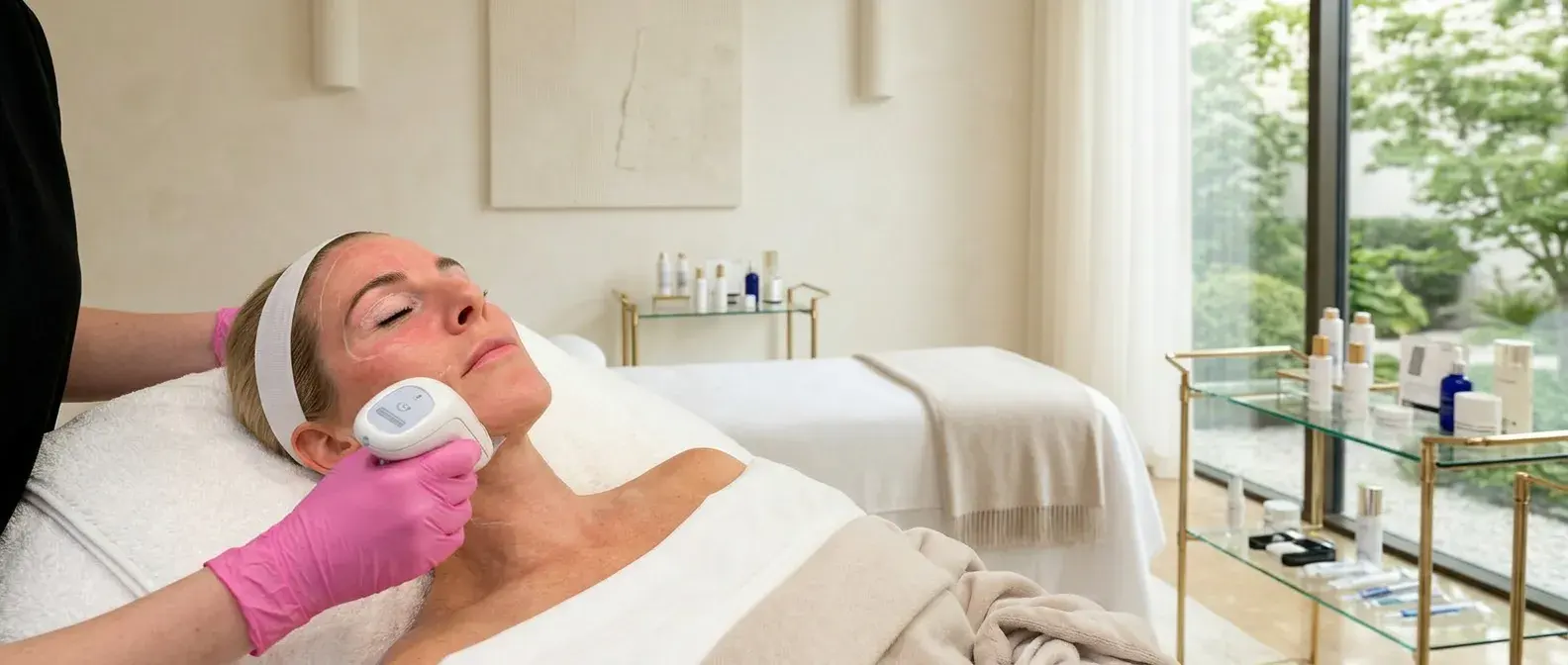
Sun Damage
The marks the sun left behind.
Sun damage is the slow build-up of every unprotected hour. A spot near the temple, a wash of brown across the cheekbones, skin that feels rougher than it used to, a few red threads around the nose. Most of it responds to clinical treatment, though not all of it the same way.
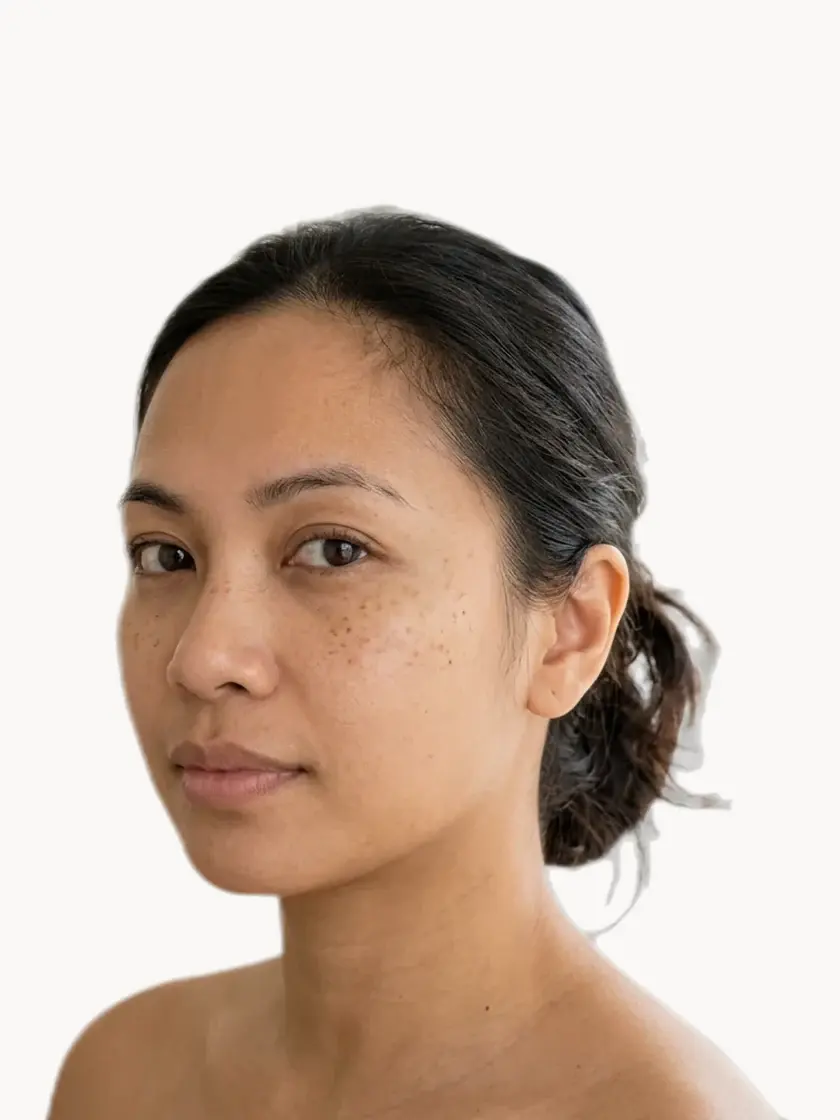
Sun Damage
The marks the sun left behind.
Sun damage is the slow build-up of every unprotected hour. A spot near the temple, a wash of brown across the cheekbones, skin that feels rougher than it used to, a few red threads around the nose. Most of it responds to clinical treatment, though not all of it the same way.
CONCERN & CAUSES
What Sun Damage Looks Like
Most patients arrive calling it one thing. In the treatment room, sun damage usually splits into a few distinct presentations, and each one responds to a different tool.
01
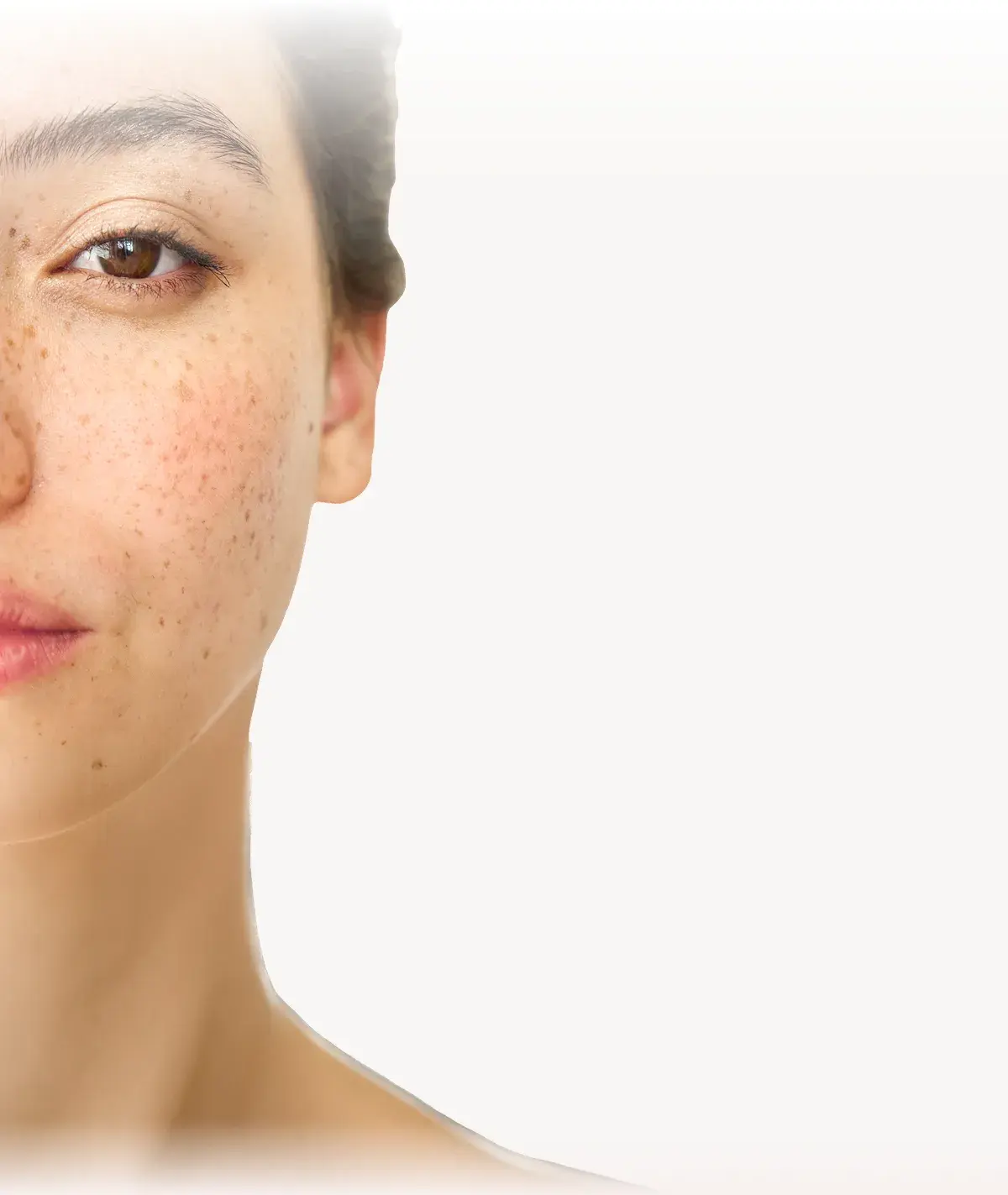
Sun Spots and Age Spots
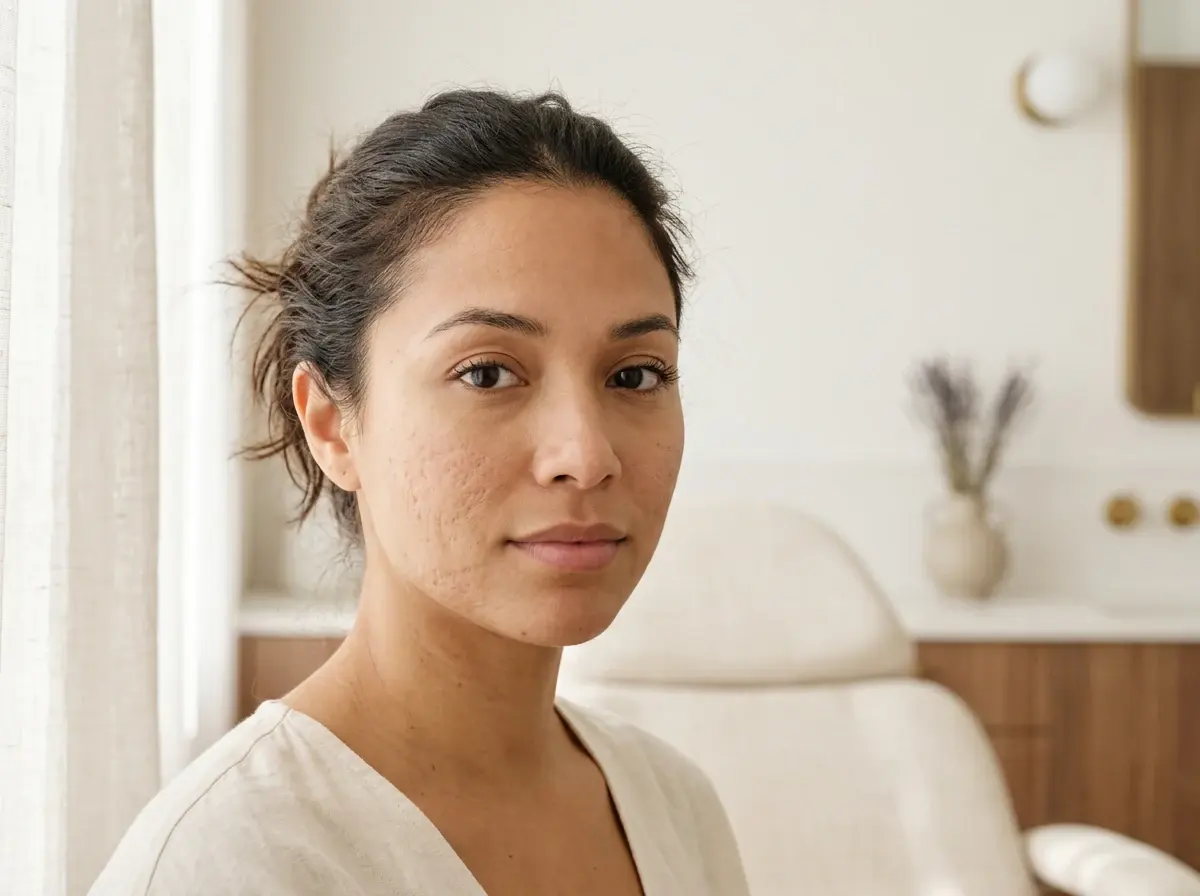
Focal patches form where melanocytes overproduced pigment after UV exposure. They settle on hands, temples, forehead, and chest with defined borders, and respond well to targeted laser and peel protocols.
02
Diffuse Dyschromia
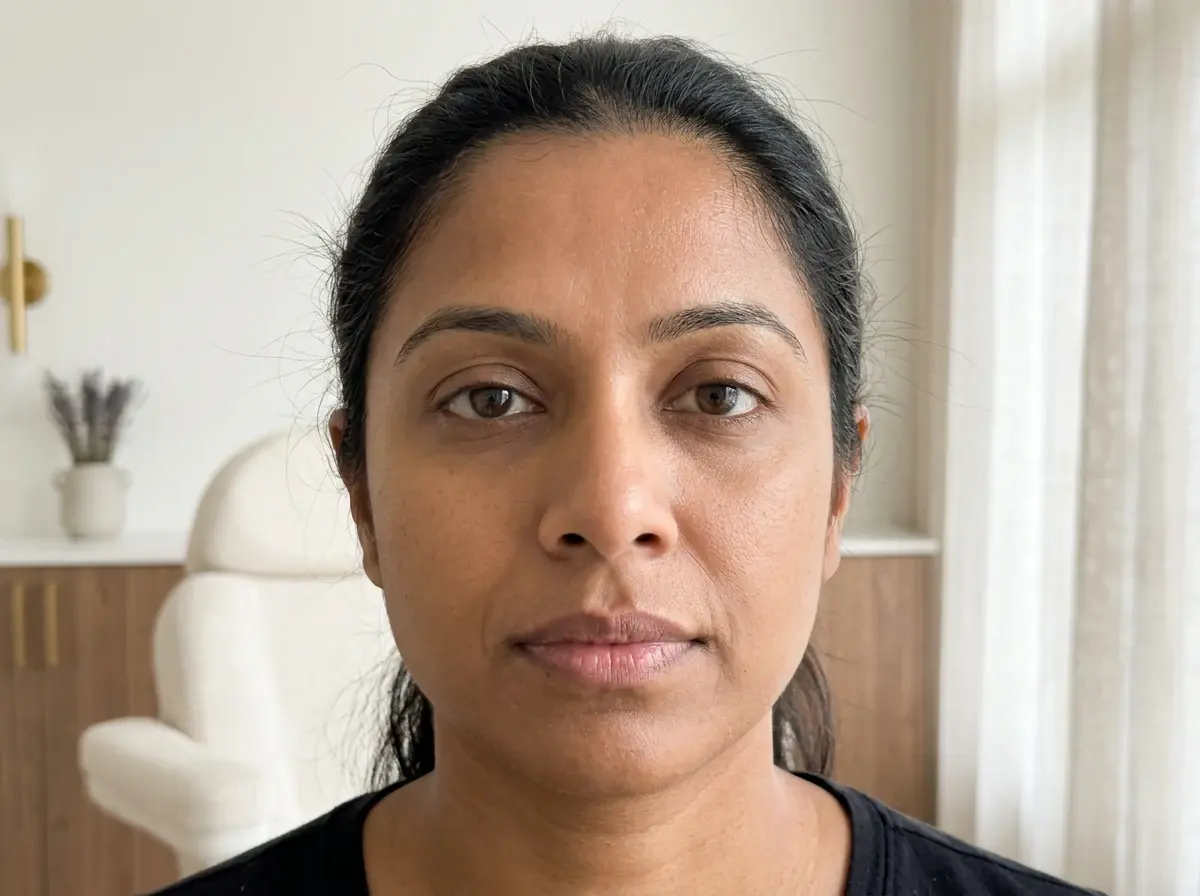
Uneven brown washes drift across the cheeks, jawline, and temples, less defined than discrete spots. They often layer over old acne marks or hormonal melasma, and respond to combined laser, topical, and peel work.
03
Photo-Aged Texture
Cumulative UV breaks down collagen and elastin, what clinicians call solar elastosis. Pores read larger, the surface turns rough, and fine lines set in early, which resurfacing can rebuild at the dermal level.
04
Broken Capillaries
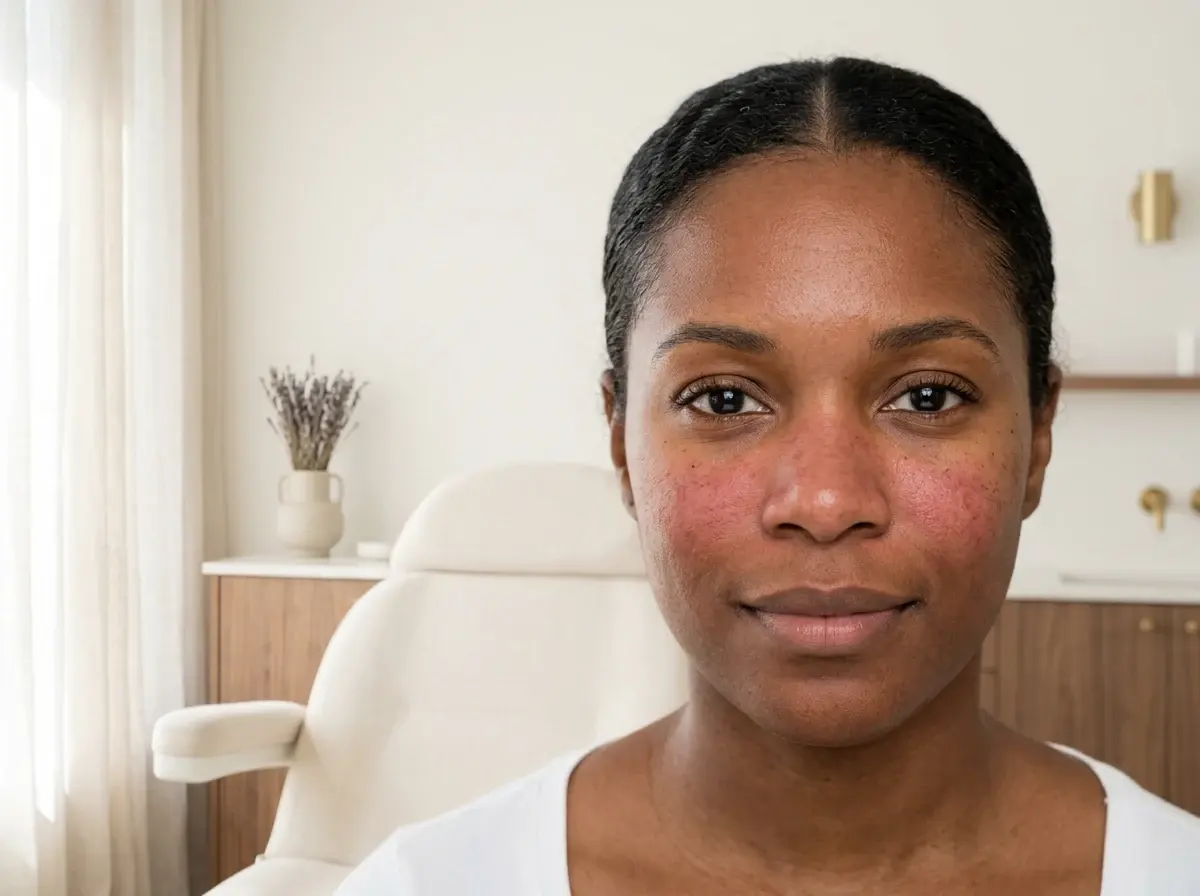
UV weakens capillary walls until small red threads stay dilated across the cheeks, around the nose, and over the décolletage. They respond to vascular laser settings inside a broader photofacial protocol.
Treatment Benefits
Layered Protocols for Sun Damage in Pickering
The order of treatment decides the result. Victoria, an RN with over a decade of clinical experience, lightens pigment first, then resurfaces and rebuilds collagen, so each step works on skin the last one already evened.
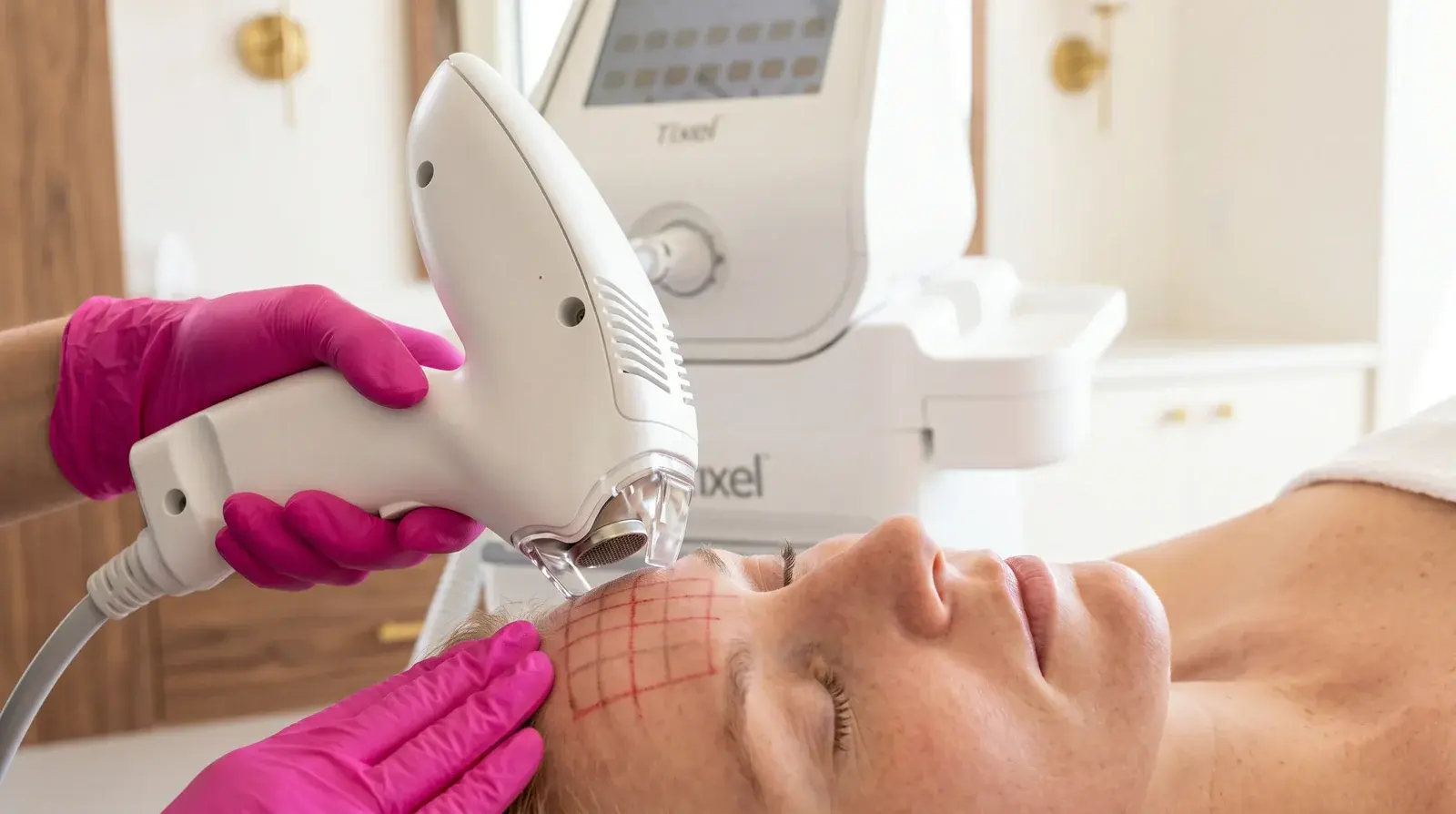
Tixel Skin Resurfacing
A thermal-energy resurfacing treatment. A heated titanium tip creates fine micro-channels in the skin, prompting renewal and softening photo-aged texture and surface pigment.
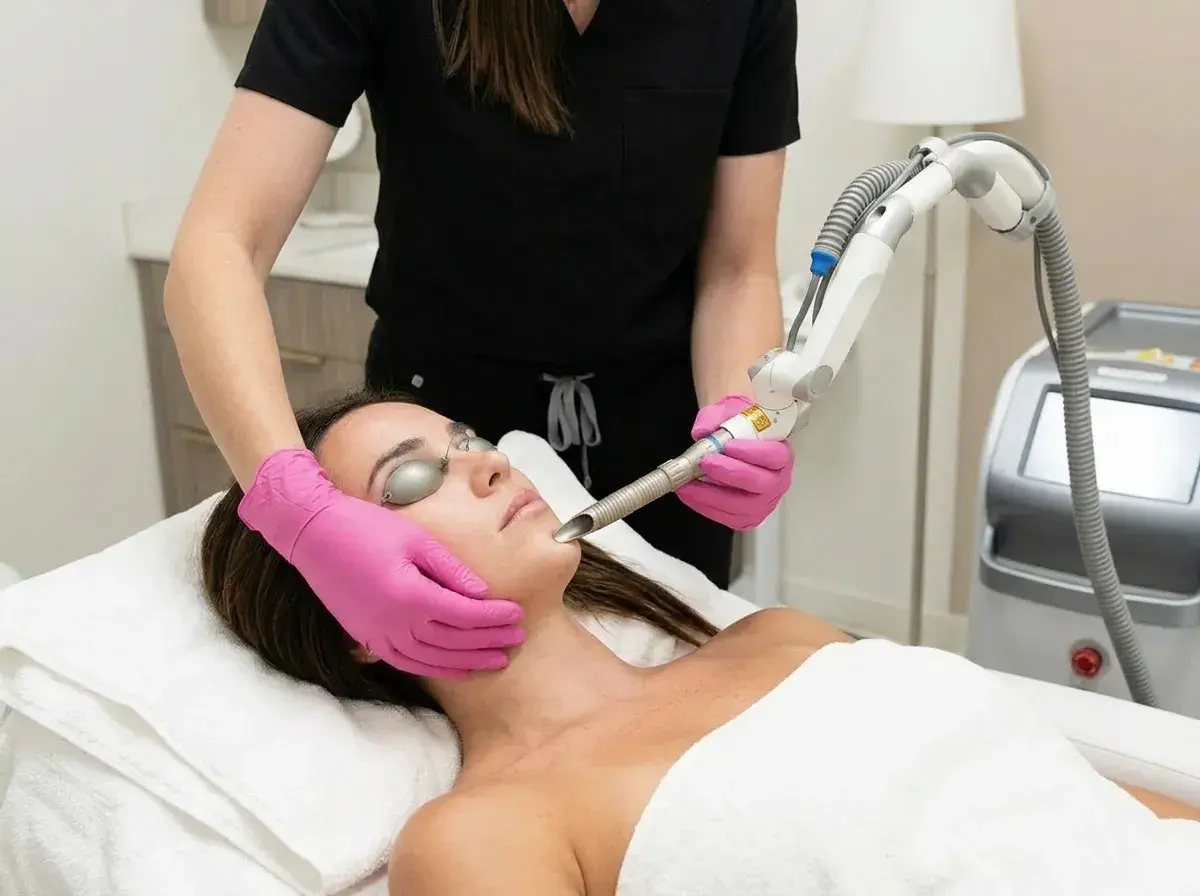
Fotona Laser
A Fotona laser treatment that uses controlled wavelengths to break down excess pigment and resurface photo-aged skin, addressing sun spots and rough texture together.
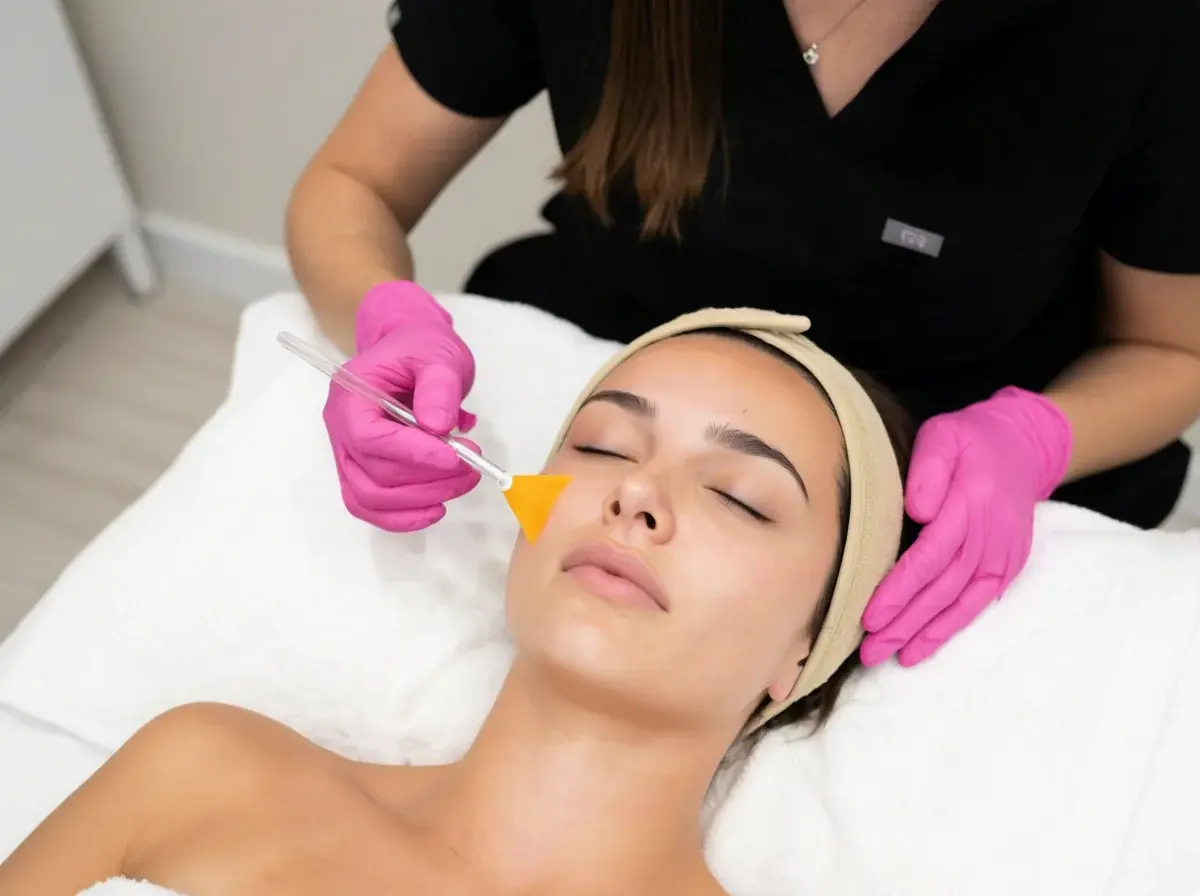
Chemical Peels
A clinical-grade peel that accelerates turnover so pigmented, photo-damaged surface tissue lifts off and clearer skin comes through.
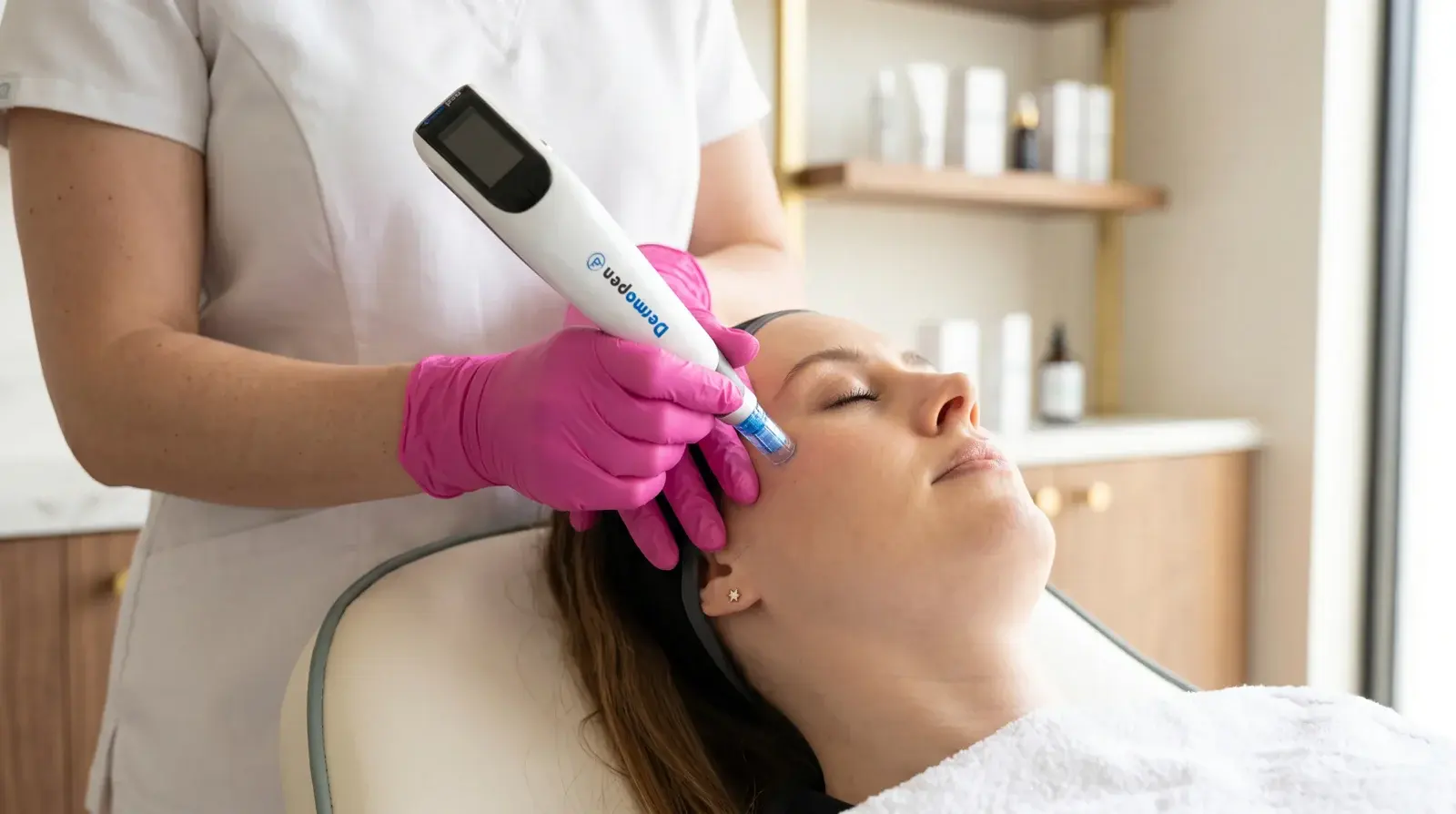
DP4 Microneedling Facial
A microneedling treatment that creates controlled micro-channels at adjustable depths to trigger collagen and elastin remodelling in the dermis.
How to Protect Your Skin After Treatment
Treated pigment stays cleared, but skin keeps forming new damage every time it meets unprotected UV. Daily protection carries the result over the long run, and the habits below are how you hold it.

Cleanse Gently

Treat Daily

Hydrate the Barrier

Mask Strategically

Protect Daily
Recommended Skincare Protocol
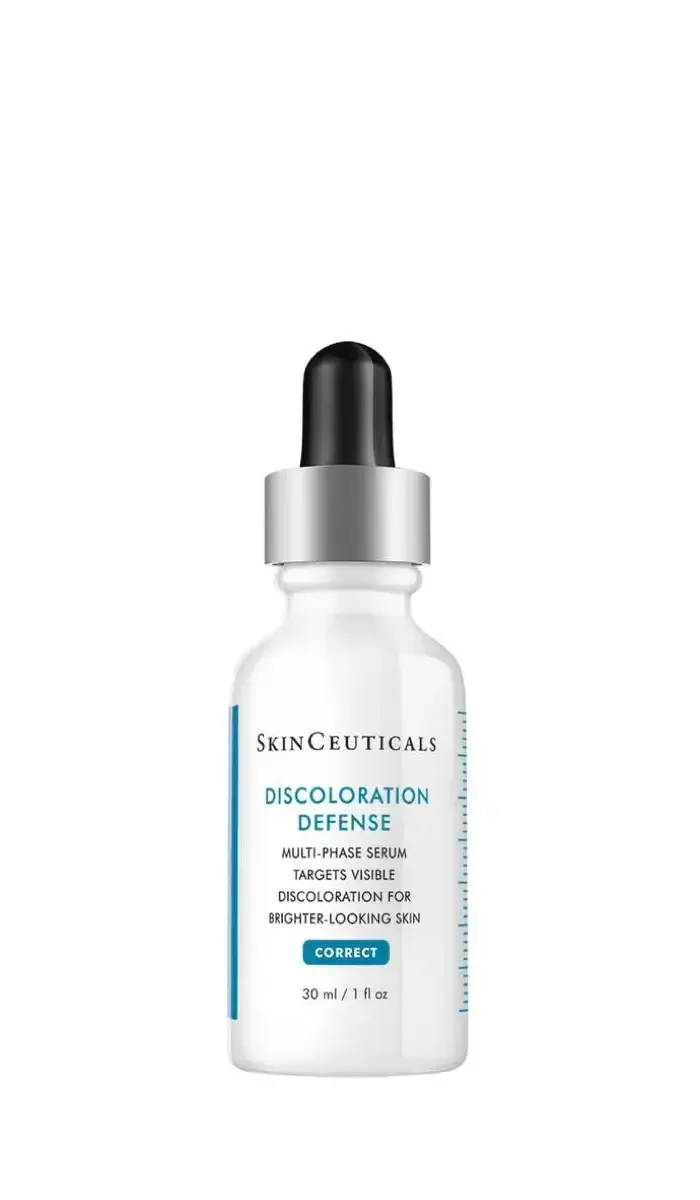
SkinCeuticals Discoloration Defense
A daily corrective serum that targets excess pigment at the source with tranexamic acid, niacinamide, and HEPES, helping hold an even tone between treatments.


.webp&w=3840&q=75)




Skin Club Membership
Join the Skin Club
Exclusive Savings on Every Visit.
Beautiful skin is a long-term commitment, and Skin Club membership makes that commitment rewarding. Members receive preferred member pricing, priority booking with their preferred practitioner, and a personalized treatment roadmap so results keep building with every visit.
Discounted treatment packages and member-only pricing
Priority booking and scheduling with your preferred practitioner
Complimentary skin assessments & personalized treatment plans


The right plan starts with the right assessment.
Same-week consultations. No referral required.
FAQ
Common Questions About
Sun Damage Treatment
Most sun damage responds well to clinical treatment. Discrete spots often clear in two or three sessions of targeted laser, while tone and texture improve over a series of resurfacing. Daily SPF is what holds the result, because without it new pigment forms faster than treatment can clear it.
For discrete sun spots and age spots, laser-based hyperpigmentation treatment is the first-line option. The wavelength fragments excess melanin so the body clears it through natural turnover, and most spots fade meaningfully in one to three sessions. Chemical peels can refine any residual surface pigment afterward.
No. Sun damage comes from cumulative UV exposure and shows up as defined spots, diffuse browning, broken capillaries, and texture change. Melasma is a separate, hormonally driven pigment condition that UV worsens but does not cause. The two often share a face, so your practitioner assesses the pattern before recommending a protocol.
Discrete sun spots often respond in one to three laser sessions. Diffuse dyschromia and texture work usually take three to six sessions of combined treatments, spaced three to six weeks apart. Your practitioner builds the timeline around your specific pattern at the consultation.
Hyperpigmentation laser involves three to seven days of darkening and flaking as pigment lifts. Chemical peels run two to five days of peeling depending on depth, and DP4 microneedling involves one to three days of redness. 4D Facelift usually means three to five days of redness and tightness. Your practitioner walks you through each recovery before booking.
Treated pigment does not return on its own, but new sun damage forms with every unprotected exposure. Daily broad-spectrum SPF and a maintenance routine keep results intact for years. Without daily protection, new spots and dyschromia accumulate at the same rate as before.
Yes, and most sun damage plans do. Staging matters: pigment treatments first, then resurfacing once the tone has evened, then collagen-stimulating work. Combining everything in one session is rarely the right call, while layering over weeks gives stronger results.
Some lasers carry higher risk for medium and deeper Fitzpatrick types because they can trigger post-inflammatory pigment. Your practitioner selects wavelengths and settings calibrated to your skin type and tests cautiously before treating broader areas. Patients with deeper tones may rely more on peels and microneedling than on aggressive laser.
Pricing depends on which treatments your plan combines and how many sessions you need. We outline costs in detail at your consultation so you can plan the full protocol upfront rather than session by session.
Yes, and prevention protects every result you treat for. Daily broad-spectrum SPF 30 or higher, reapplied every two hours outdoors, is the foundation. Antioxidant serums, protective clothing, and shade during peak hours all lower cumulative exposure. Your practitioner recommends the SPF and topicals that fit your routine at the consultation.
Sun-damaged skin is repaired by clearing the built-up pigment and rebuilding the surface underneath. Intense pulsed light and pigment-targeting lasers lift brown spots and even out tone, while resurfacing and microneedling smooth rough texture and soften fine lines. A course of sessions with daily SPF gives the steadiest improvement, since unprotected sun undoes the progress.