
Stretch Marks
The lines creams cannot reach.
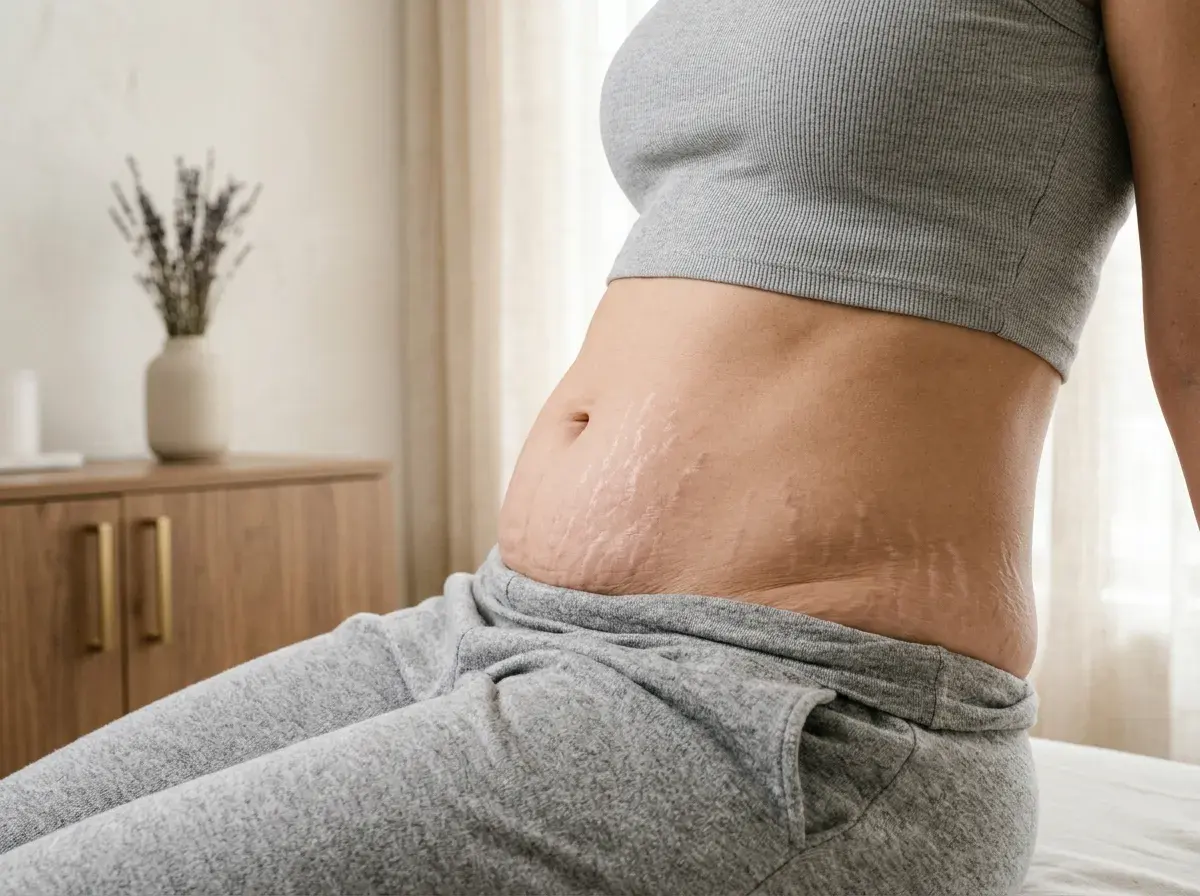
Stretch marks are scars inside the dermis, the structural layer of your skin. They form when skin stretches faster than it can adapt and the collagen and elastin fibres tear. Creams sit on the surface, so the damage underneath stays the same. Treatment that reaches the dermis is what changes them.

Stretch Marks
The lines creams cannot reach.
Stretch marks are scars inside the dermis, the structural layer of your skin. They form when skin stretches faster than it can adapt and the collagen and elastin fibres tear. Creams sit on the surface, so the damage underneath stays the same. Treatment that reaches the dermis is what changes them.
CONCERN & CAUSES
Why Stretch Marks Form
Stretch marks appear when skin stretches faster than it can adapt and the dermal fibres tear. The triggers below all share that pattern, and the stage of the mark shapes how it responds.
01
Pregnancy
Rapid abdominal expansion in the third trimester is one of the most common triggers. Pregnancy hormones also soften collagen, so the dermis tears more easily and patches the gap with scar tissue.
02
Growth Spurts
Adolescents who grow quickly in height often develop marks across the back, thighs, and hips. The skin cannot lay down collagen fast enough to keep pace, so the dermal fibres tear at weak points.
03
Weight Fluctuations
Gaining or losing weight quickly stretches or compresses the skin past what it can absorb. The dermis gives way at its weakest points, and the body fills those tears with firmer scar tissue.
04
Genetics and Stage
Some people inherit collagen that resists tearing while others mark easily, so family history matters. Newer red marks with active blood flow respond faster than older white or silver ones.
Treatment Benefits
Treatments That Reach the Dermis in Pickering
Stretch marks change at the layer where the damage sits, not on the surface. Victoria, an RN with over a decade of clinical experience, assesses the stage, depth, and colour of your marks, then matches the tool and intensity to what your skin actually needs.
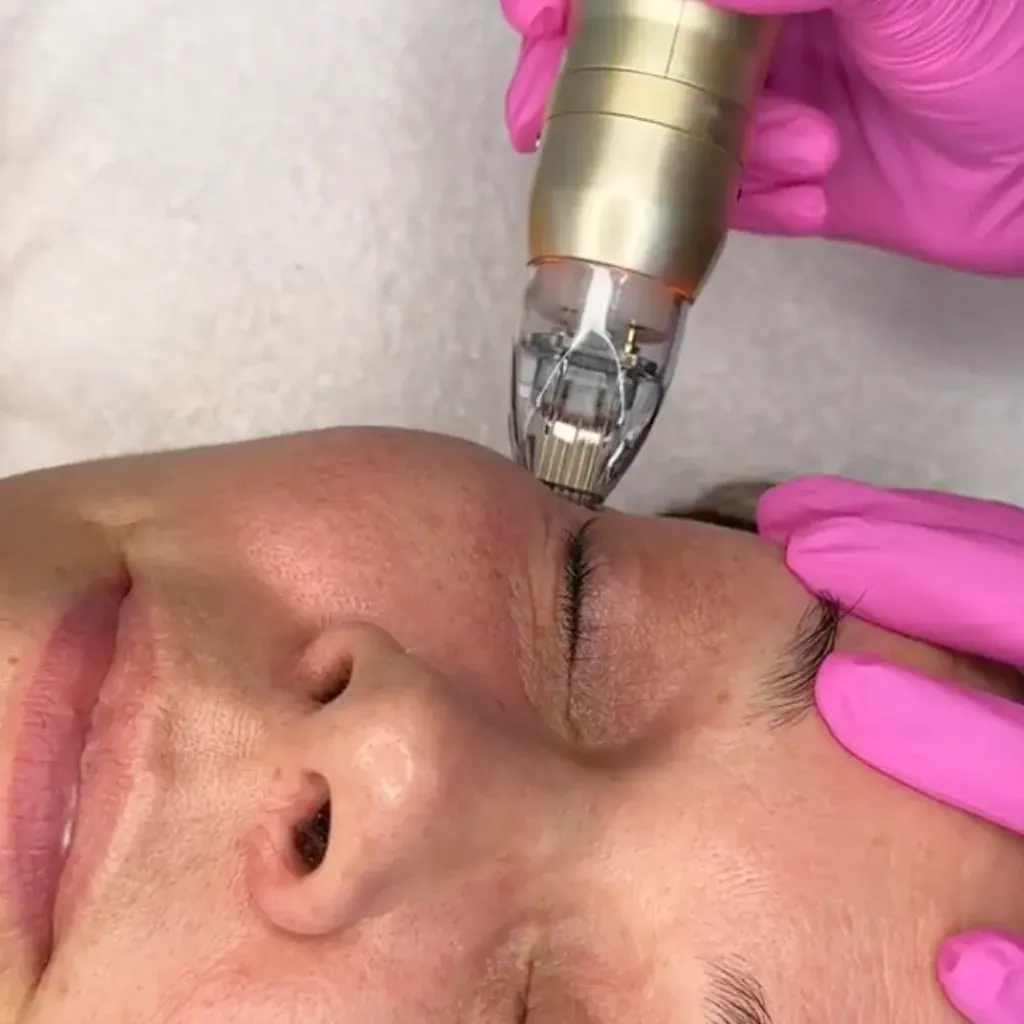
RF Microneedling
A treatment that combines fine needles with radiofrequency energy delivered into the dermis, creating controlled micro-injuries at the depth where stretch-mark scarring sits.
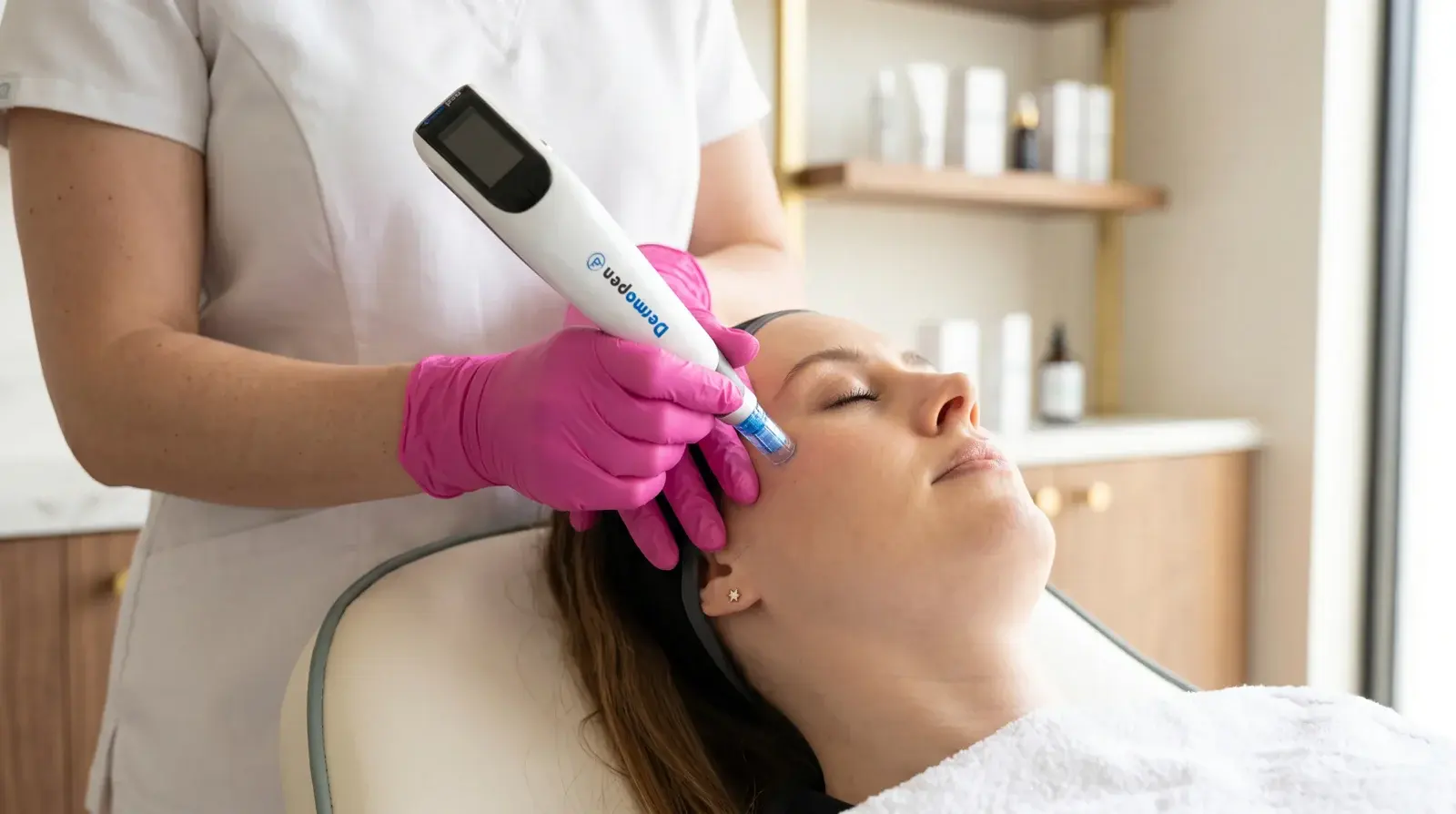
Microneedling
A treatment that uses fine needles to create thousands of controlled micro-channels in the skin, prompting a natural collagen-building repair response.
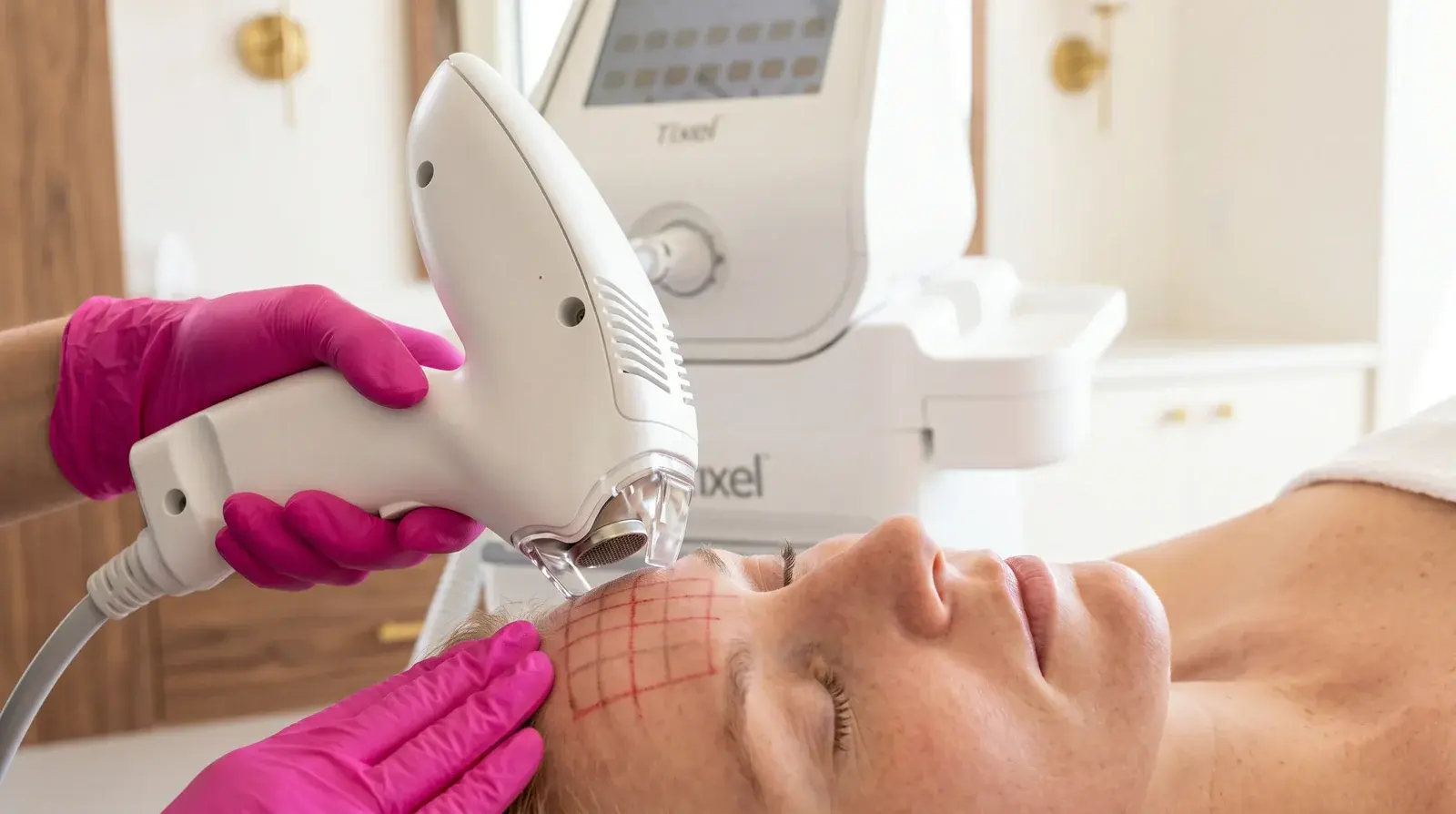
Tixel
A thermal-energy treatment that uses a heated titanium tip to create fine micro-channels, prompting renewal in the upper dermis with less downtime than ablative laser.
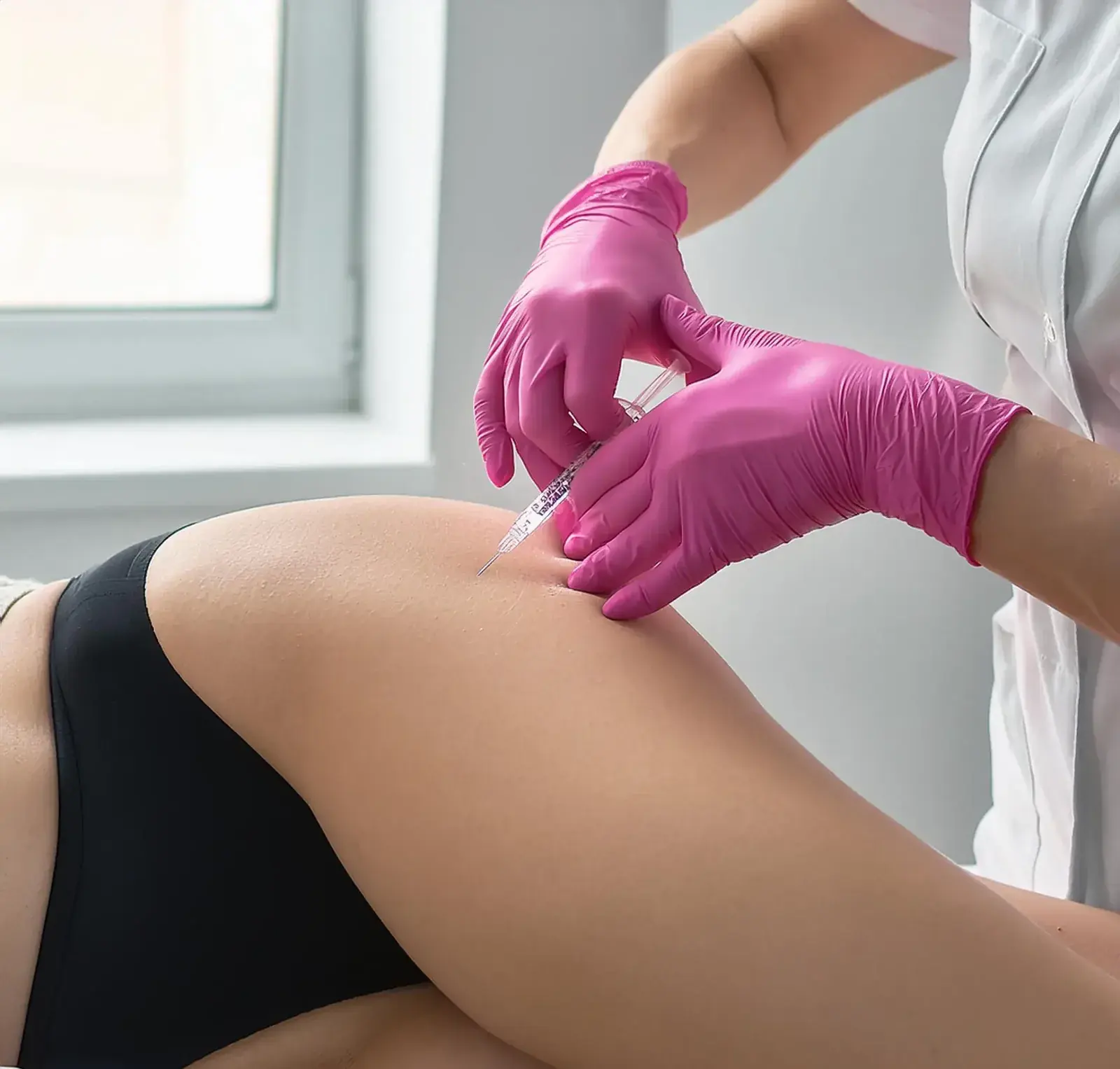
Sculptra
A biostimulator injection placed beneath the mark that prompts the body to build its own collagen gradually over several months.

How to Support Your Skin Between Sessions
Stretch-mark treatment rebuilds collagen over a series, and the skin holds that progress better when the barrier is calm and protected. The habits below keep treated areas comfortable and help the new tissue settle steadily.

Cleanse Gently

Treat Daily

Hydrate the Barrier

Soothe After Sessions

Protect Daily



.webp&w=3840&q=75)



Skin Club Membership
Join the Skin Club
Exclusive Savings on Every Visit.
Beautiful skin is a long-term commitment, and Skin Club membership makes that commitment rewarding. Members receive preferred member pricing, priority booking with their preferred practitioner, and a personalized treatment roadmap so results keep building with every visit.
Discounted treatment packages and member-only pricing
Priority booking and scheduling with your preferred practitioner
Complimentary skin assessments & personalized treatment plans


The right plan starts with the right assessment.
Same-week consultations. No referral required.
FAQ
Common Questions About
Stretch Mark Treatment
Stretch marks can be significantly faded and smoothed, but most cannot be removed entirely. Because they are scars in the dermis, the goal is real improvement rather than erasure. Clinical treatments produce roughly 50 to 80 percent improvement in texture, colour, and depth for most patients, and Victoria sets realistic expectations at your assessment.
RF microneedling usually produces the strongest results because it delivers energy directly into the dermis where the damage sits. Combining it with standard microneedling or Sculptra can improve outcomes for deeper or wider marks. Victoria chooses the combination after assessing the stage, depth, and colour of your specific marks.
Yes. Even silver or white stretch marks respond to microneedling, though they typically need more sessions than newer marks. The collagen-building response occurs regardless of how long the marks have been present, so older marks still improve with a longer, well-spaced series.
Most patients see visible improvement after three to four sessions spaced four to six weeks apart. Deeper or more extensive marks may benefit from five to six sessions. Victoria outlines a realistic timeline during your assessment so you know what progress looks like at each stage.
RF microneedling often produces stronger results for stretch marks because it delivers energy at precise depths within the dermis. It also carries less risk of post-inflammatory hyperpigmentation, which makes it a safer first choice for medium and deeper skin tones than some laser options.
Pricing depends on the treatment type, the size of the area, and the number of sessions recommended. We provide a clear cost breakdown at your consultation so you can plan the full protocol upfront rather than session by session.
A topical numbing cream is applied before treatment, so most patients describe the sensation as warm prickling rather than pain. Discomfort is manageable, and a session typically takes thirty to sixty minutes depending on the size of the area being treated.
We recommend waiting at least three months postpartum, and until you have finished breastfeeding, before starting treatment. This allows your hormones to stabilise and your skin to settle into its new baseline, which gives the treatment a steadier foundation to work on.
Most patients have one to three days of redness and warmth in the treated area, similar to a mild sunburn. The region stays a little sensitive for a day or two. You can usually return to normal activity the same day, and we ask you to keep the area protected from sun while it settles.
Treated marks do not reappear in the same place once collagen has rebuilt, but new stretch marks can form if the skin stretches rapidly again, such as during a future pregnancy or quick weight change. Maintaining a stable weight and a hydrated, well-supported barrier lowers the chance of new marks forming.